OKR workshops for creative marketing leads at a mobile game developer
Three online OKR workshops for 13 team leads with different levels of OKR experience. 85% of those who left feedback rated the workshops 8 or higher out of 10.
Meet the client: a mobile game developer
The company builds free-to-play games for mobile platforms and social networks, aimed at a mass audience worldwide.
It is growing its own expertise in live ops, analytics and the long-term development of game services, and runs projects with audiences of many millions.
Anonymous case study. Published without the company name, as agreed with the client.
OKR training for creative marketing leads
The client asked us to run OKR training for the leads of their creative marketing team.
Formally, the team already worked with OKR. In practice, every lead understood the system differently: they wrote OKRs in their own way and mixed up Objectives, Key Results and initiatives.
A lot of time went into drafting goals and agreeing them one-to-one with the manager. Measurable results and the link between OKR and KPI, which the director asked for, were also a struggle. This was especially hard for creative work, where the impact on revenue and business results is not always obvious.
Key goals of the OKR training
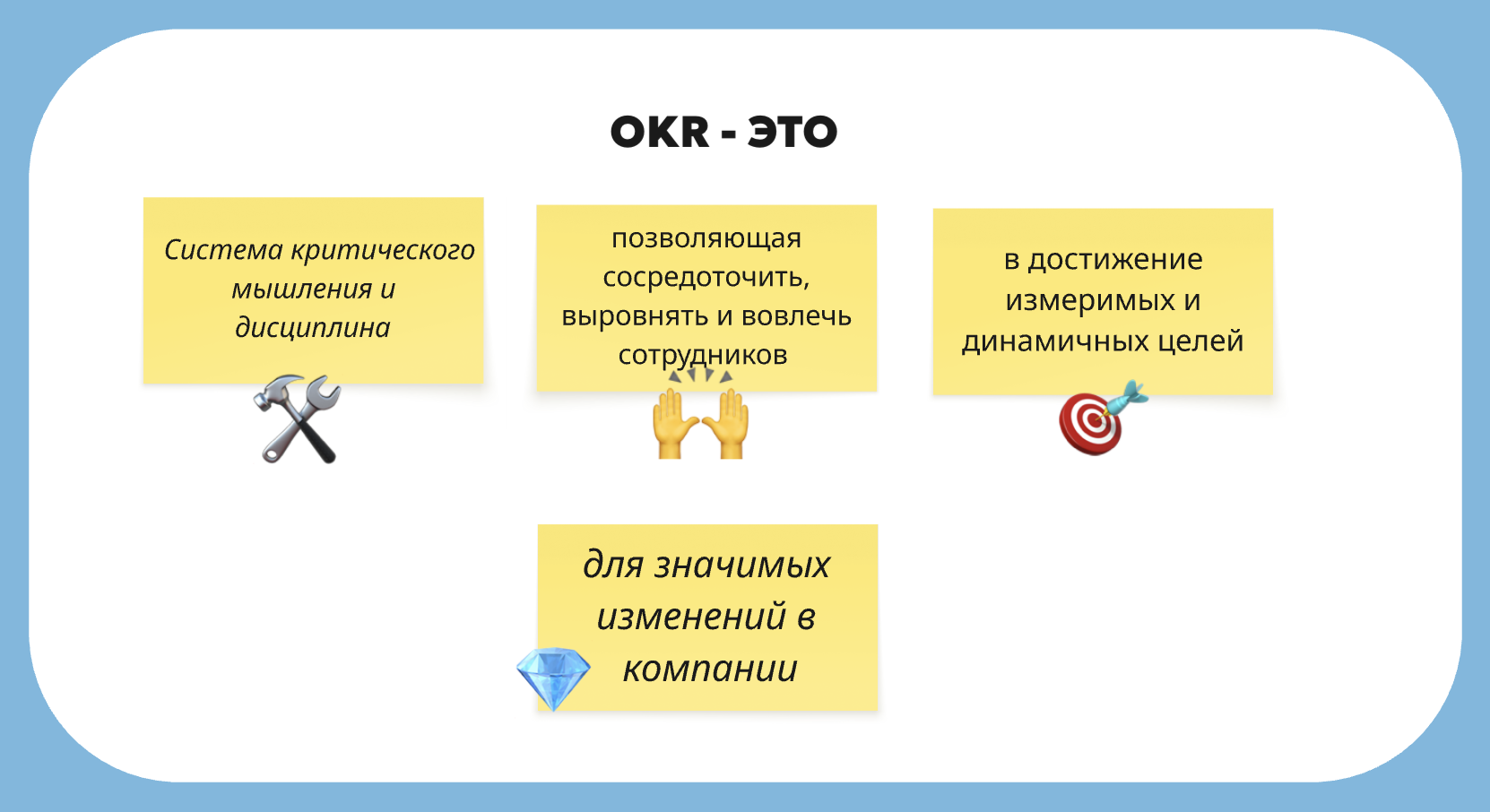
At first, the client expected the training to present the one “right” way to work with OKR, which they could then roll out as a team standard. After the first meetings with the trainer, we agreed that OKR is not a rigid methodology with a single correct implementation.
So we agreed on three main goals for the workshop series:
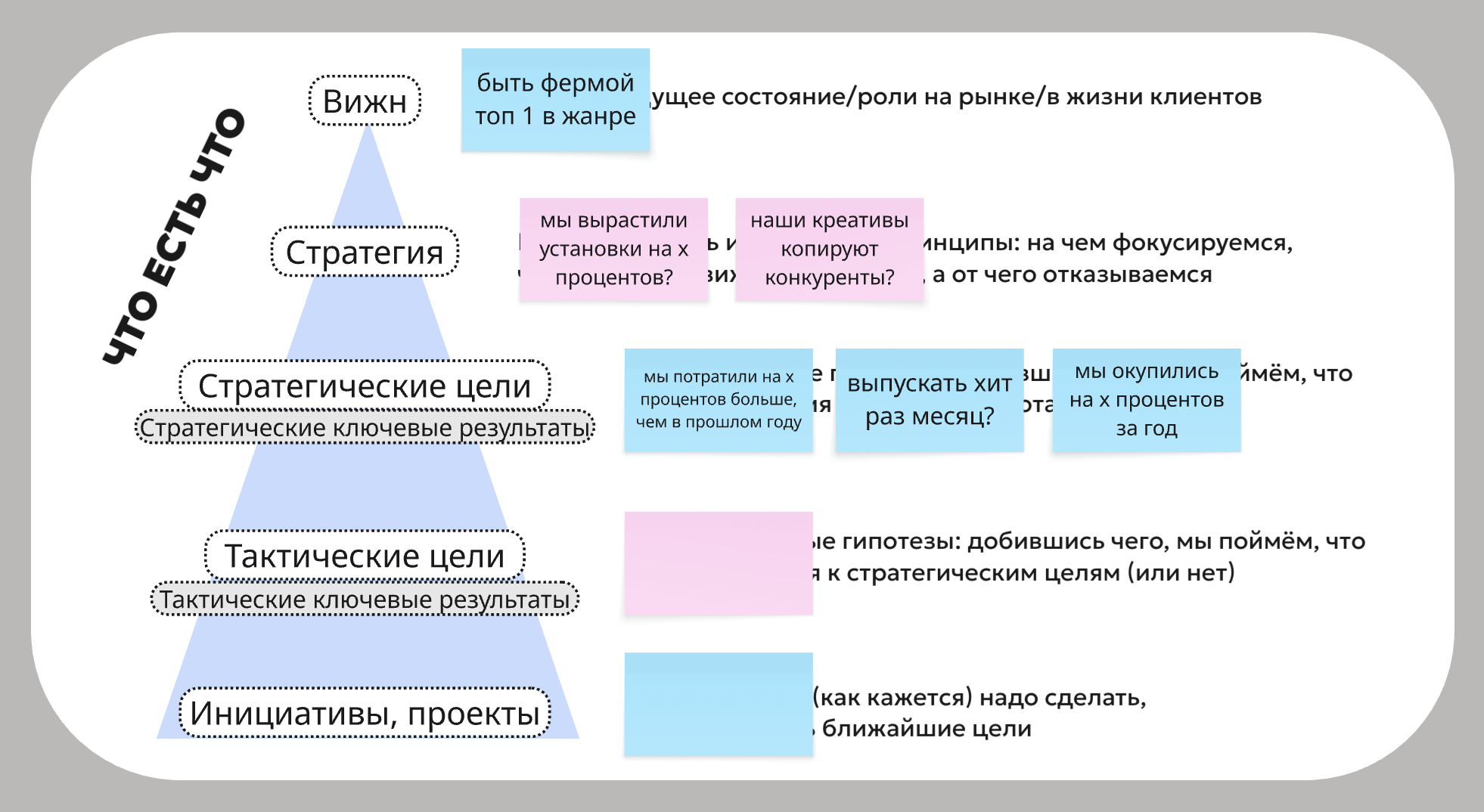
- Run an overview training that helps the group align on OKR as a system and on its key principles
- Make sure everyone reads the key terms the same way: Objectives, Key Results, KPI and initiatives
- Practise writing goals in a “correct enough” OKR logic
Based on interviews and a survey, we added the topics the group itself flagged as important:
- How to involve the team in goal setting, and whether you should
- OKR processes: how leads can keep things transparent, share one information space and not waste extra hours in meetings
- KPI in the OKR system: what it is and how to use it well
Online OKR workshops in detail
A group of creative marketing leads with different levels of OKR knowledge. The trainer’s task was to give everyone a shared foundation and enough practice to apply it in their own goals.
Want similar workshops for your team?
Tell us about your request, and we’ll suggest a format and programme that fit your team’s context. See also our corporate facilitation training, sessions for teams and the inDrive case study.
What the client and participants say
My feedback hasn’t really changed since I gave it on the last day of the training. I still like everything very much.
I genuinely felt inspired, because this is information I already have somewhere to apply: it’s clear what we can improve, what to fix and where to use it. Overall, I left the training feeling inspired. I want to work on our shared vision, I want to deconstruct how our Run and Change is set up, I want to set new goals. I’m literally bursting with it.
In my head, it all came together into a really useful picture. First, the training helped me organise the scattered information I already had. Second, I got much more than I expected. To be honest, I thought it would be quite applied and simple: roughly, “this is OKR, do this, don’t do that”. But it turned out to be much deeper, and that was a pleasant and valuable surprise for me.
Everything matched my expectations of the training. When I planned it, I mainly wanted it for the team: so that people would better understand what OKR is and how to work with it. I already had some knowledge and understanding of working with OKR myself.
Overall, I think the information was presented in a structured way. I know the team had some feedback about the way it was delivered. Maybe it didn’t stand out as much for me, because at any moment I understood what we were talking about, and in general everything was clear enough. Thank you!
How we prepared for the training
We built the programme around this group: their goal-setting process, their difficulties and the topics they asked for.

Discussed the request with the client
To clarify the business goals of the training, the group’s make-up and expectations

Interviewed a focus group
To learn more about the team’s context, their current approach to goal setting and its pain points

Surveyed the participants
It gave us the overall context and each participant’s level, and helped us prioritise the most important topics

Analysed the answers and built the programme
Arina picked the topics that mattered most to the group and showed the programme to the client twice to collect and include their feedback
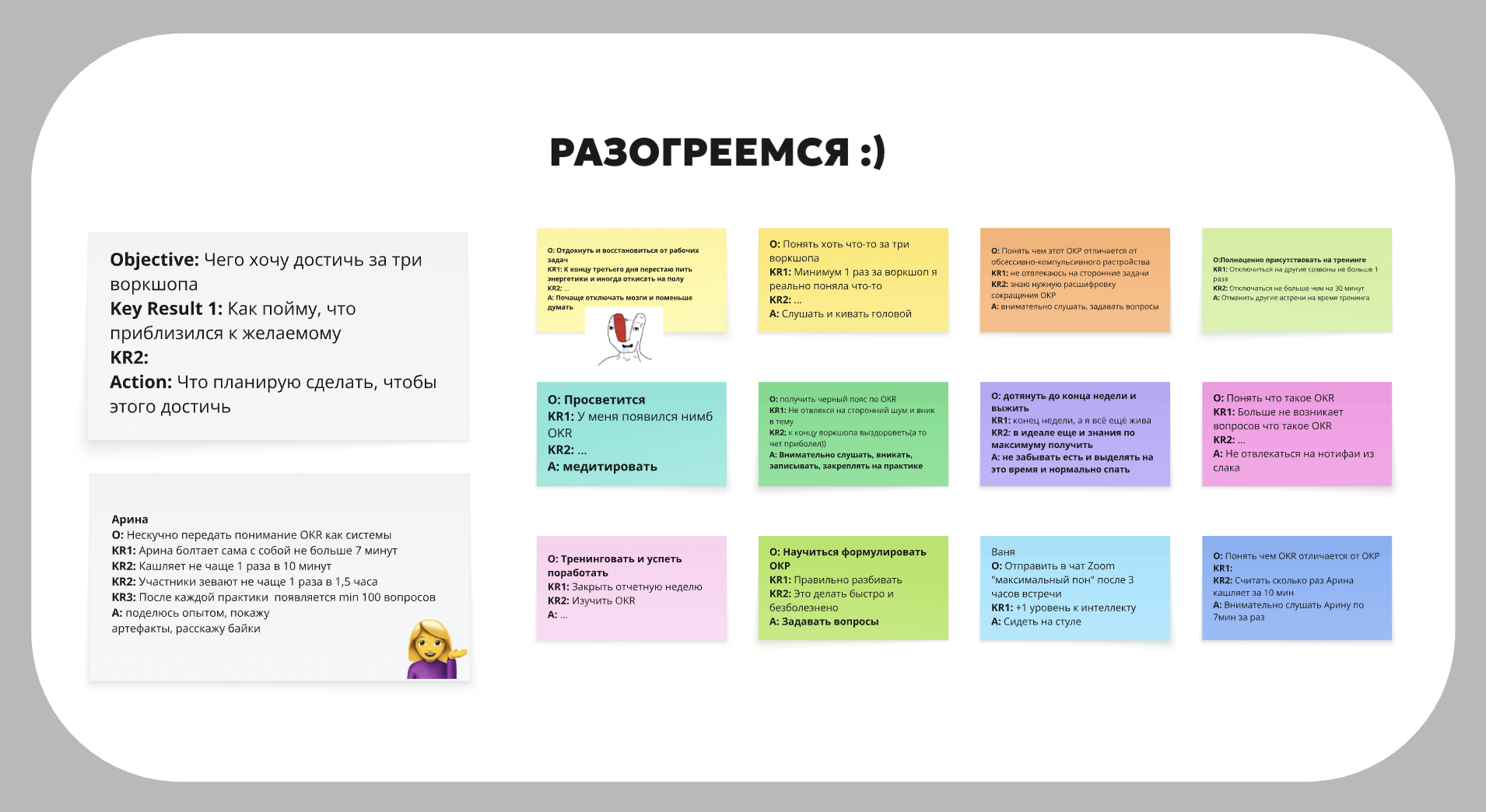
Preparing this training took a lot of work: me, the client and the group all wanted to fit a great deal into the programme! The group kept asking for more practice. For me, that was a good sign: the topic wasn’t a formality for them, and they really wanted to figure it out and try the OKR tools in action.
In the end, it was a rich and intense experience. It helped participants not only learn and try new things, but also find an explanation for the contradictions in their work and start looking at goal setting and leadership processes in a new way.
The OKR workshop programme
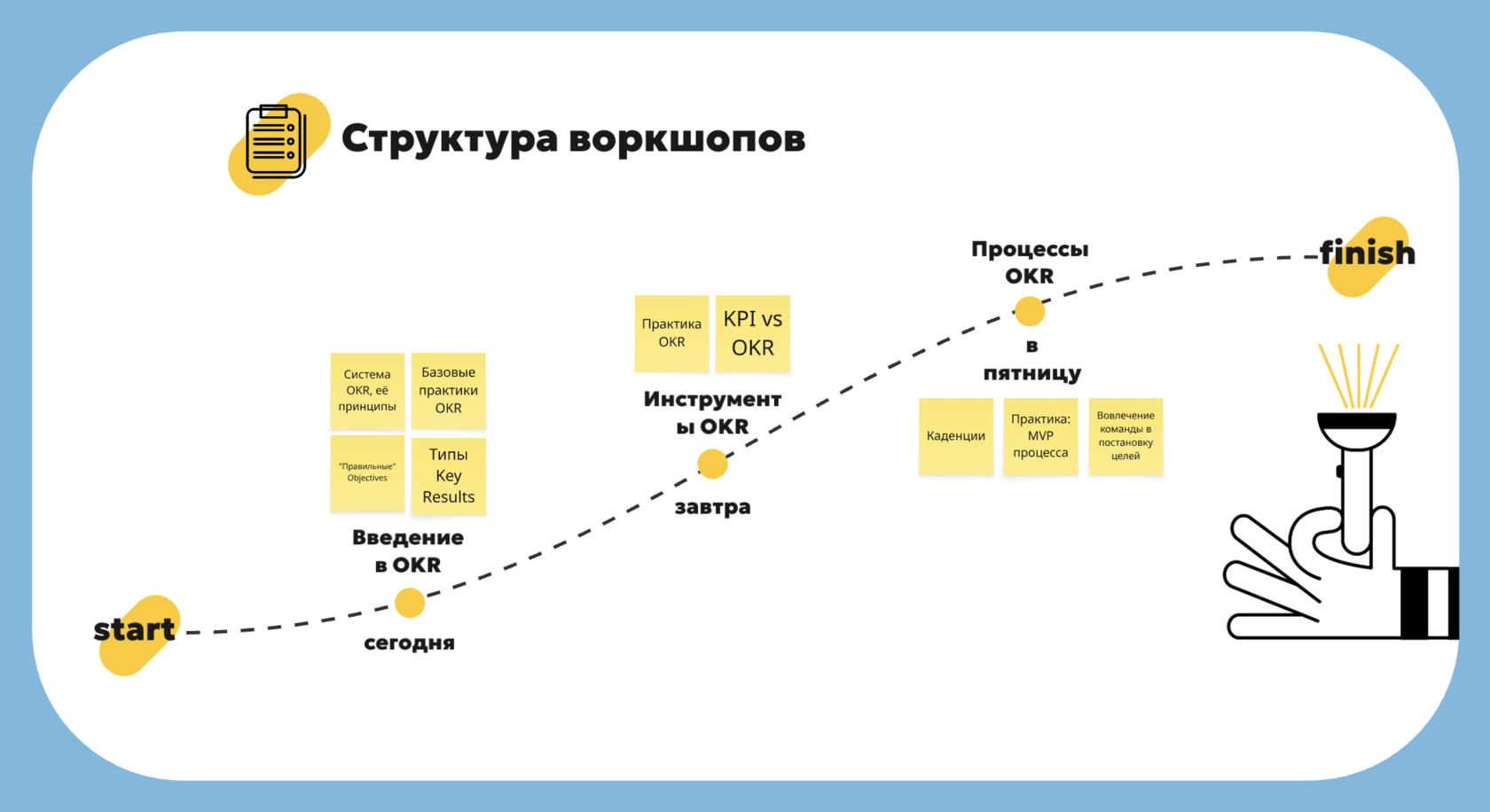
Three workshops took the group from the principles of OKR to tools and then to processes. The group kept asking for more practice, so the programme turned out rich and intense.
Introduction to OKR
- Learned the key principles and basic practices for adopting OKR successfully
- Understood when an OKR system will help a company and a team, and when it won’t
- Learned to tell well-written OKRs from poor ones
OKR tools
- Worked through a real case of writing OKRs
- Learned to improve and sharpen Key Results using the different types of KRs
- Explored the difference between KPI and OKR and how they connect, using work cases
- Understood stretch goals and how to handle ambition in OKR
OKR processes
- Learned which processes make up the OKR cycle
- Looked at examples of each team and cross-team process from the trainer’s experience
- Built a minimum viable OKR process cycle (MVP) for the participants’ context and identified what could make their goal work more effective
OKR training outcomes
The workshop programme was very intense, but the group and the trainer worked hard and answered every question that came up.
- 85% of those who left feedback rated the usefulness of the training and the trainer’s work 8 out of 10 or higher
- After the practice, participants said they understood better how goals are set at the top levels of the organisation and how goals align vertically and horizontally with strategy
- They came up with concrete ideas to apply at work: splitting tasks into Run and Change, linking team goals to the department strategy, and using metrics or dashboards to track progress
A shared language for goals
The team created a shared set of concepts and reduced the risk of misreading each other when discussing goals and results in the future.
Frequently asked questions about OKR training
How long does the OKR training take?
In this case, it was three online workshops of three hours each. We adapt the number and length of sessions to the team’s request and schedule.
Do you teach one “correct” way to do OKR?
No. OKR is not a rigid methodology with a single correct implementation. We help the team align on the principles and key terms, then practise on their own goals.
How do you adapt the programme to the team?
Before the training, we discuss the request with the client, interview a focus group and survey the participants. The programme is built on what we learn and agreed with the client.
Which languages do you work in?
English and Russian, online and onsite.