Facilitation Training
for a European Fintech
The training that launched an internal facilitator community — and cut costs on external facilitators
Our Client
A European fintech company operating as a fully digital bank — no physical branches — focused on entrepreneurs and small-to-medium businesses.
The company has built a unique culture based on Holacracy — a system where teams and employees make decisions within their own areas of responsibility and are accountable for results. Holacracy is an organizational model in which distributed authority replaces traditional hierarchy.
Corporate Facilitation Training
The training organizers decided to build an internal facilitator community. They chose Co-Actors to deliver the training and launched an internal survey where applicants described their facilitation experience and motivation to join.
Key Focus Areas
The goal: grow an internal facilitator community capable of running non-standard sessions and strengthening a culture of productive meetings across the company.
Based on interviews and surveys, we built the programme around four key themes:
- Managing group dynamics
- Handling difficult situations
- Confident facilitation stance
- Ready-made formats for brainstorming and retrospectives
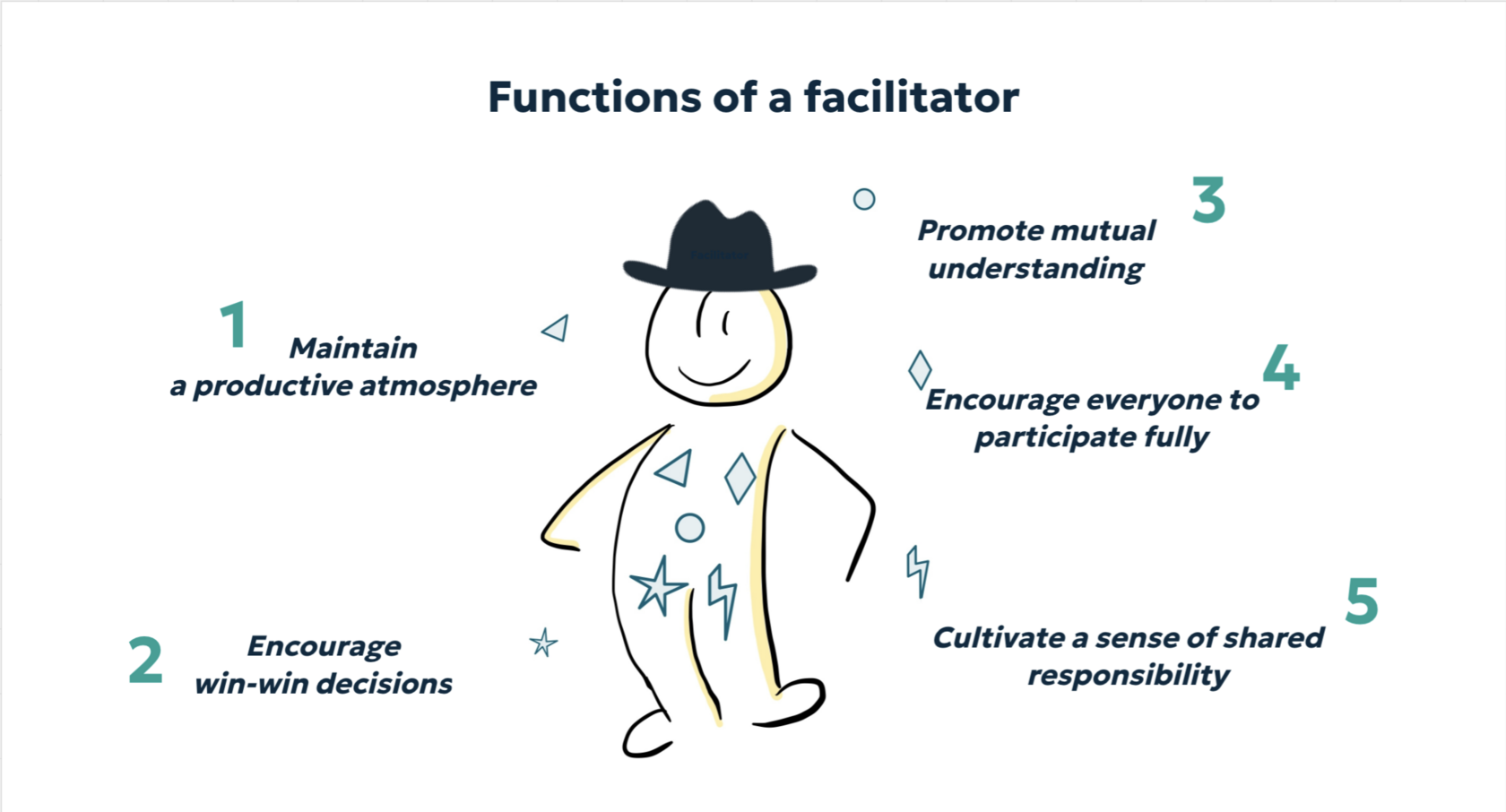
"For me, facilitation has two essential components. First: the techniques that help us organize group work — engage participants, surface all opinions, reach the best decision, build a realistic action plan. Second: the facilitator's stance when working with people. How not to carry the group on your own. How to become a true partner to the group. How to stay grounded when plans change, when there's resistance, or when participants are disruptive."

Training in Detail
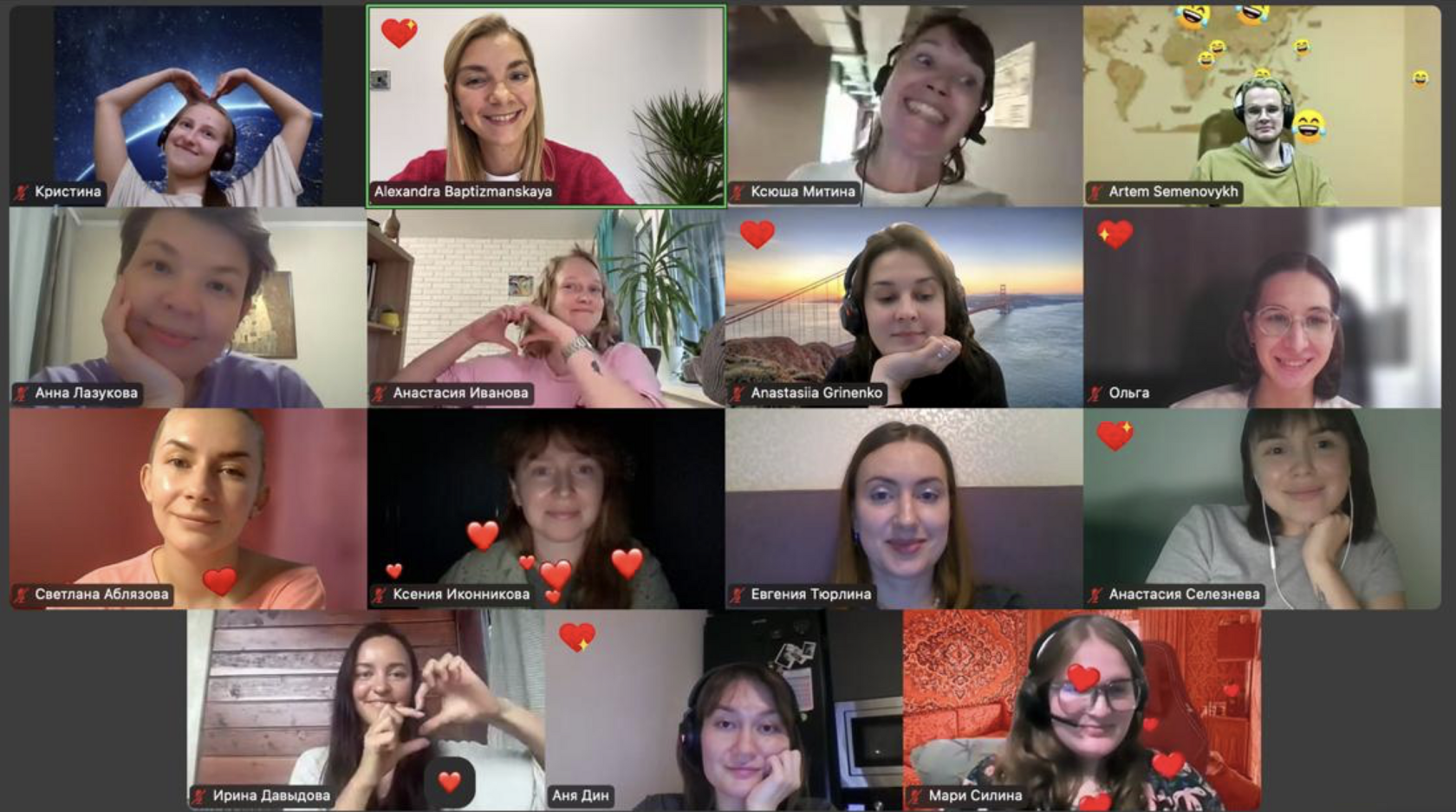
15 participants with varying facilitation experience — each already involved in running meetings at different levels. The trainer's task: go deeper, not repeat the basics.
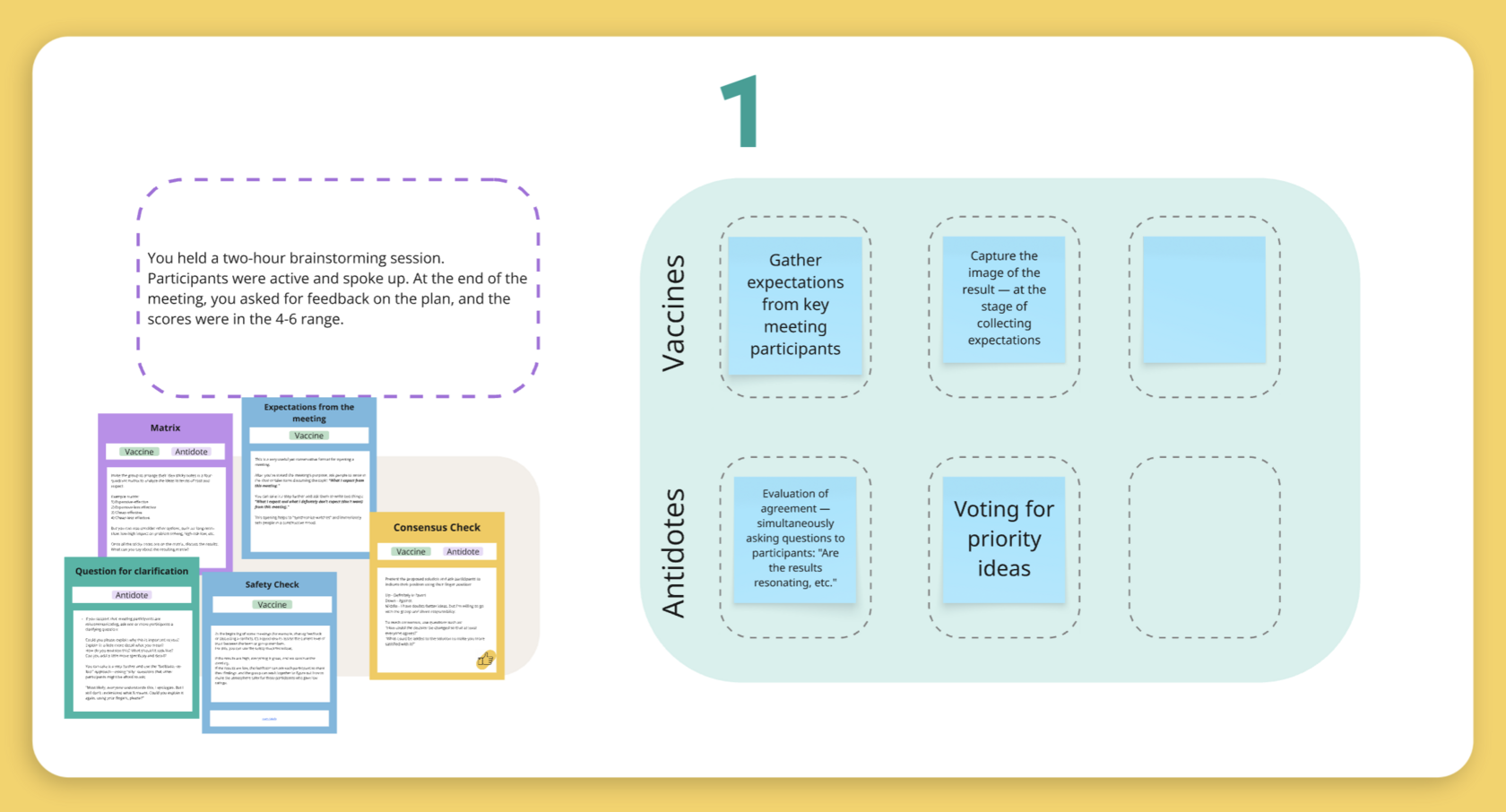
How We Prepared

Discussed the brief with organizers
Clarified business goals, group composition, and format expectations.

Launched a participant survey
Gathered context, assessed experience levels, and prioritized the most relevant topics.

Analysed and adapted the programme
Alexandra identified the group's key needs, accounted for the company's culture, and presented the final version to the client for sign-off.

Adapted for Holacracy
A special step: tailoring the training to the company's Holacracy model and internal terminology.
"Holacracy means specific roles, areas of accountability, and decision-making principles. To make the training more valuable for the group, I refreshed my knowledge of their model and adapted the content accordingly."
Programme Adaptation
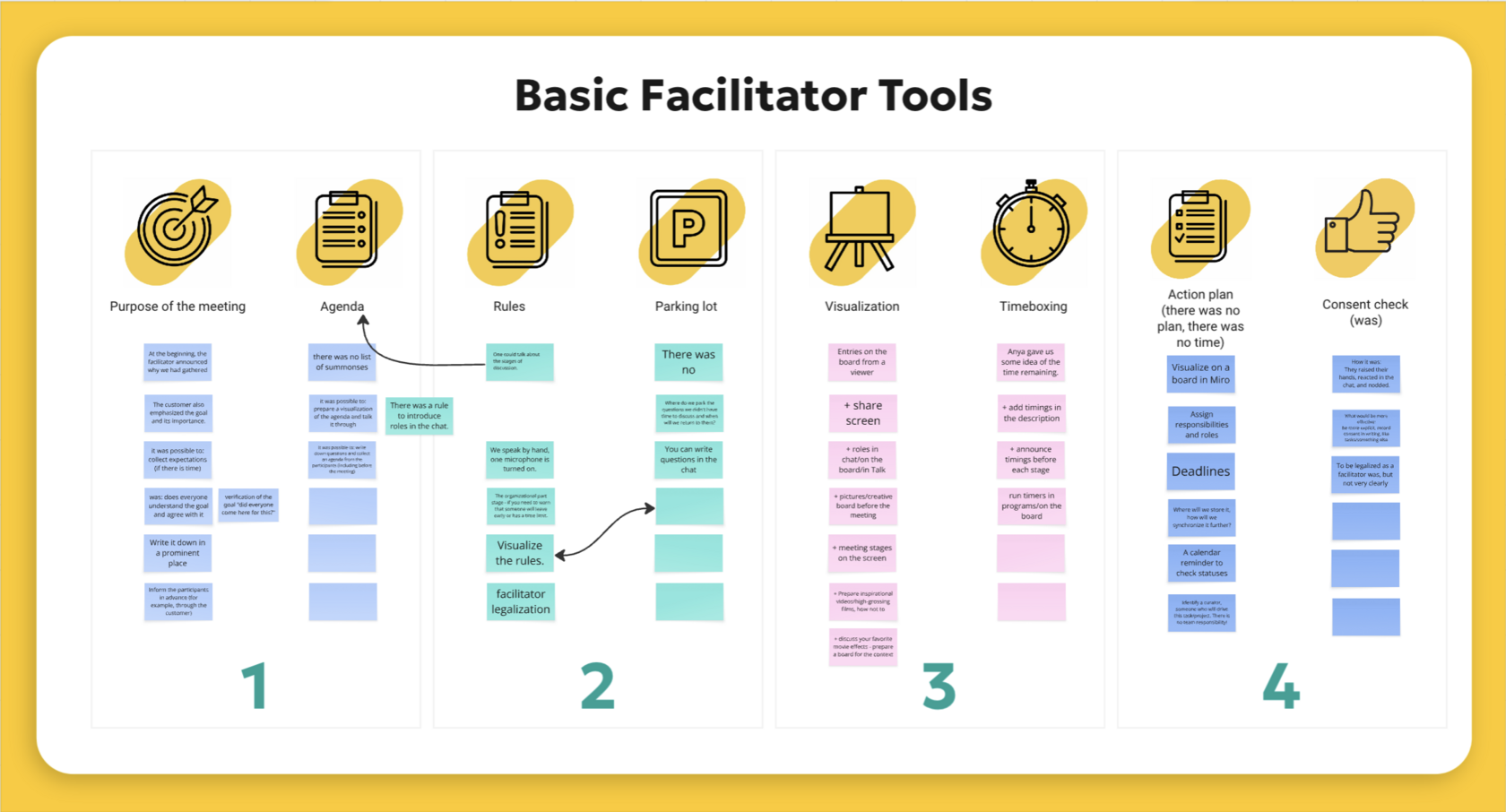
Opening, Closing & Core Tools
Participants learned to confidently open and close meetings, manage group dynamics, and apply core facilitation tools.
Effective Group Decision-Making
Covered decision-making structures, engagement techniques, and consensus-checking methods.
Difficult Situations in Meetings
Explored how to stop toxic dynamics, maintain neutrality, and guide the group through challenging moments.
Meeting Design & Preparation
Learned to design meetings for specific needs, build working scenarios, and avoid common preparation mistakes.
Training Results
A highly productive alliance formed between the trainer and the group. Participants quickly found common ground, shared values and approach — creating an atmosphere where it was easy to learn, experiment, and enjoy the process.
- Aligned on facilitation techniques and the distinct role of the facilitator
- Practised facilitation tools in a safe environment
- Built session plans for real work meetings
- Received a personal toolkit for independent meeting design
NPS score —
participants highly rated the training
A thriving internal facilitator community
People who can run high-quality meetings at any level — and support each other.
What Participants Say
What mattered to us wasn't just telling people about facilitation — it was revealing its depth: the facilitator's role, areas of responsibility, and common challenges. The programme delivered on this deeply. The format worked for participants with very different experience levels — valuable for those with some background and those with serious expertise. For me, the chance to share real cases and professional situations directly in the training was especially powerful.
All our expectations were fully met. The most valuable thing — the lasting effect after training. Participants consciously took on the facilitator role. We set up a transparent internal request process, and for the third month running participants are working with real requests and building practical experience.
Loved the organization, the clear timing, the Miro design — everything was intuitive and visually clean. The structure and content were excellent. Our trainer Alexandra was wonderful! When the training ended, I was actually sad it was over — that's how warm, engaging, and useful it was.